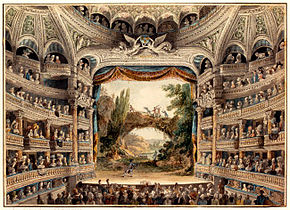
Women as Spectators
Comments by Colley Cibber; Margaret Cavendish; Mary Rich; Anne, Lady Halkett
Anne, Lady Halkett, comments on going to the theatre unescorted by a man, in her Autobiography (c.1677–78).
What my childish actions were I think I need not give account of here, for I hope none will think they could be either vicious or scandalous. And from that time till the year 1644 I may truly say all my converse was so innocent that my own heart cannot challenge me with any immodesty, either in thought or behaviour, or an act of disobedience to my mother, to whom I was so observant that as long as she lived I do not remember that I made a visit to the nearest neighbour or went anywhere without her liberty. And so scrupulous I was of giving any occasion to speak of me, as I know they did of others, that though I loved well to see plays and to walk in the Spring Garden sometimes (before it grew something scandalous by the abuse of some), yet I cannot remember three times that ever I went with any man besides my brothers; and if I did, my sisters or others better than myself was with me. And I was the first that proposed and practised it, for three or four of us going together without any man, and everyone paying for themselves by giving the money to the footman who waited on us, and he gave it out at the playhouse. And this I did first upon hearing some gentlemen telling what ladies they had waited on to plays, and how much it had cost them; upon which I resolved none should say the same of me.
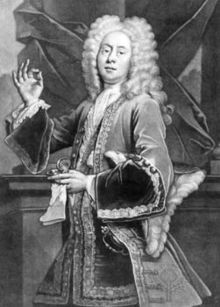
Actor-manager and dramatist Colley Cibber (1671–1757) comments on the reason women wore masks at the theatre.
But while our Authors took these extraordinary Liberties with their Wit, I remember the Ladies were then observ'd, to be decently afraid of venturing bare-fac'd to a new Comedy, 'till they had been assur'd they might do it, without the Risque of an Insult, to their Modesty—Or, if their Curiosity were too strong, for their Patience, they took Care, at least, to save Appearances, and rarely came upon the first Days of Acting but in Masks, (then daily worn, and admitted in the Pit, the side Boxes, and Gallery) which Custom however, had so many ill consequences attending it, that it has been abolish'd these many Years.
Poet and playwright Margaret Cavendish, comments in Nature's Pictures Drawn by Fancy's Pencil (1667), on the recreation of her sisters.
But to rehearse their recreations. Their customs were in winter time to go sometimes to plays, or to ride in their coaches about the streets to see the concourse and recourse of people; and in the spring time to visit the Spring Garden, Hyde Park, and the like places; and sometimes they would have music, and sup in barges upon the waters. These harmless recreations they would pass their time away with; for I observed they did seldom make visits, nor never went abroad with strangers in their company, but only themselves in a flock together, agreeing so well that there seemed but one mind amongst them. And not only my own brothers and sisters agreed so, but my brothers and sisters in law, and their children, although but young, had the like agreeable natures and affectionable dispositions. For to my best remembrance I do not know that ever they did fall out, or had any angry or unkind disputes. Likewise, 1 did observe that my sisters were so far from mingling themselves with any other company, that they had no familiar conversation or intimate acquaintance with the families to which each other were linked by marriage, the family of the one being as great strangers to the rest of my brothers and sisters as the family of the other.
Mary Rich, Countess of Warwick (1625-1678), writes about the influence that Elizabeth Killigrew, mistress of Charles II, had on herself in her Autobiography (c.1672).
About this time [c. 1638] my fourth brother, Master Francis Boyle then (afterward Lord Shannon), was by my father married to Mistress Elizabeth Killigrew, daughter to my Lady Stafford; and my brother being then judged to be too young to live with his wife, was a day or two after the celebrating [of] the marriage (which was done before the King and Queen) at Whitehall (she being then a maid of honour to the Queen) sent into France to travel, and his wife then brought to our house where she and I became chamber-fellows, and constant bed-fellows; and there then grew so great a kindness between us, that she soon had a great and ruling power with me; and by her having brought me to be very vain and foolish, enticing me to spend (as she did) her time in seeing and reading plays and romances, and in exquisite and curious dressing.